Ethernet Virtual Private Line (EVPL) is a Layer 2 Ethernet service that carries multiple point-to-point Ethernet Virtual Connections (EVCs) over a single physical interface. Traffic is isolated from the public internet and from every other connection on the port, ensuring private and secure communication. Compared with a traditional Ethernet Private Line (EPL), which dedicates one interface to one connection, EVPL multiplexes many services onto one port – so a single site can reach many destinations without a separate physical circuit for each.
EVPL is ideal for companies with multiple branch offices, providing a high level of security and scalability.
Key characteristics of EVPL include:
EVPL allows a customer to connect to a provider’s network via a single physical interface (UNI) and run multiple virtual connections, called Ethernet Virtual Connections (EVCs), over it. Each EVC acts as a dedicated logical path between sites, even though all traffic shares the same infrastructure.
Traffic is tagged (typically using VLANs) at the UNI, enabling the provider to map it to the correct EVC and apply service policies like bandwidth and QoS. It is then transported across the provider’s shared backbone (e.g., MPLS), while remaining logically isolated and secure.
At the far end, each EVC is delivered to its own destination site, so one port can serve many locations at once. Unlike EPL, EVPL supports multiple services on a single interface, allowing flexible topologies such as hub-and-spoke or partial mesh, efficient use of resources, and easier scaling for both customers and service providers.
Ethernet Private Line (EPL) is a private, point-to-point connection between two locations, like a dedicated road used only by your data. Because no other traffic shares it, performance is fast, stable, and predictable.
It provides guaranteed bandwidth up to 400G, ensuring consistent performance even at peak times. Operating at Layer 2, EPL lets data travel directly between sites without routing delays, resulting in low latency. Its private nature also makes it a strong choice for sensitive data, such as financial systems, healthcare applications or critical backups.
EVPL connects multiple locations over a shared backbone instead of using a separate line for each site. One interface carries several virtual connections, each logically isolated from the others, which reduces both cost and complexity. New sites can be added over the existing port, without additional physical connections.
This makes EVPL well suited to businesses with many branch offices, particularly where a constant high-capacity link to every site is not required.
The main difference comes down to one word: flexibility. EPL dedicates one interface to one connection, while EVPL allows many connections – and many destinations – to share a single interface.
| EPL | EVPL | |
|---|---|---|
| Topology | Point-to-point between two sites | Point-to-point EVCs, many from one port – hub-and-spoke or partial mesh |
| Interface use | One service per interface | Multiple services multiplexed over one interface |
| Traffic isolation | Fully dedicated line, no shared traffic | Logically isolated per EVC using VLAN tags |
| Bandwidth | Guaranteed up to 400G | Guaranteed per EVC, with bandwidth and QoS set individually |
| Scalability | A new physical link is needed for each new site | New sites are added logically over the existing port |
| Cost profile | Higher – one port per connection | Lower – fewer access ports as the network grows |
| Best for | Critical, high-performance links between two locations | Multi-site, branch and cloud connectivity that needs flexibility |
EVPL is used wherever many sites need to be connected efficiently and cost-effectively, and especially where traffic must stay segmented while sharing the same access infrastructure.
In summary, EVPL is ideal for companies in expansion. With minimal investment, new sites can be added and an existing network extended, without building dedicated links between every location.
The benefits of EVPL include:
Arelion EVPL delivers high-capacity Ethernet connectivity for long-haul data center interconnect and large enterprise networks. Every connection runs as its own Ethernet Virtual Connection across Arelion’s global backbone, with dedicated, guaranteed capacity and low latency for real-time data transfer, while remaining logically isolated from all other traffic.
Built for resilience and scalability, the service uses dynamic routing with multiple paths to maintain high availability (up to 99.99%) and minimize disruption from events such as fiber cuts. It supports flexible topologies, including point-to-point and hub-and-spoke, and allows seamless bandwidth scaling up to 400G across Arelion’s global network.
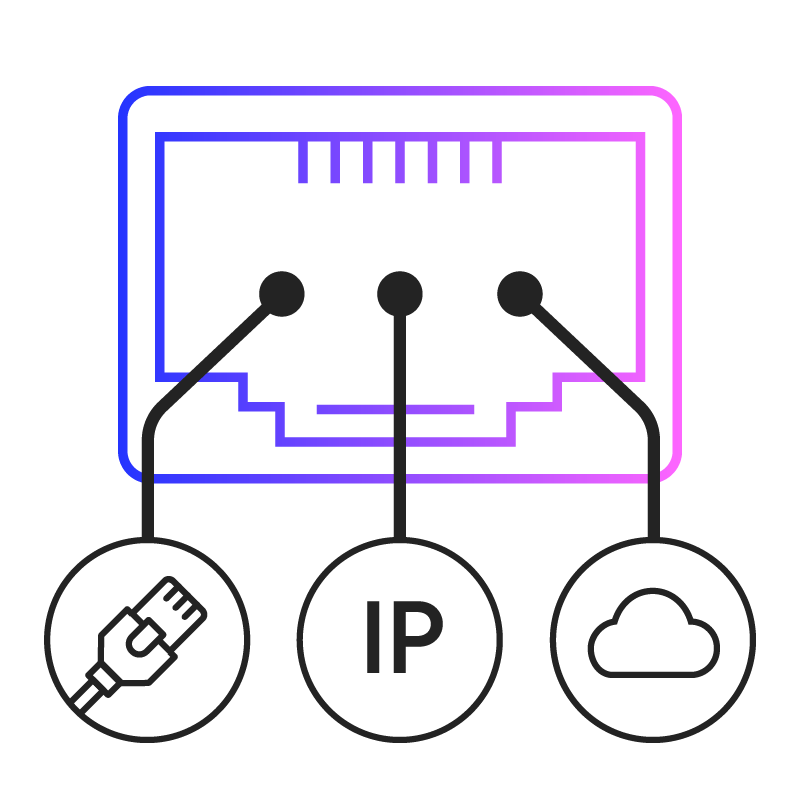
(...)Efficiency is enhanced through Multiple Services on One Port (MSOP), enabling EVPL, Cloud Connect and IP services to run over a single interface. Combined with traffic prioritization (QoS), global PoP reach and Mplify-certified SLAs, this creates a reliable and cost-effective platform for high-performance connectivity.
As part of Arelion’s AI Direct suite, 400G EVPL is optimized for AI and data-intensive workloads, supporting large-scale data transfer and global interconnection of infrastructure across data centers and cloud environments. By combining scalability, performance, and operational efficiency, it helps bridge the AI connectivity gap and support the growth of modern digital applications.
Whether you are connecting a handful of branch offices or interconnecting data centers at 400G, our team can help you design the right topology and capacity for your network. Get in touch to discuss your requirements.
Ethernet Virtual Private Line (EVPL) is a Layer 2 Ethernet service that carries multiple point-to-point Ethernet Virtual Connections over a single physical interface. Each connection is logically isolated from the others and from the public internet, so one port can securely reach many destinations.
EPL dedicates one physical interface to a single point-to-point connection between two sites. EVPL multiplexes several connections onto one interface, so a site can reach many destinations from a single port. EPL suits critical two-site links; EVPL suits multi-site, branch and cloud connectivity that needs flexibility.
Traffic is tagged at the user network interface, typically using VLANs, so the provider can map it to the correct Ethernet Virtual Connection and apply bandwidth and QoS policies. It then crosses the provider’s shared backbone, logically isolated, and is delivered to its own destination site.
An EVC is a logical point-to-point path between two sites across the provider network. Several EVCs can share one physical port, each with its own bandwidth profile and quality of service settings, while remaining separated from the traffic on every other EVC.
Yes. EVPL traffic never touches the public internet. Each connection is carried in its own Ethernet Virtual Connection and kept logically isolated from all other traffic on the shared backbone, which makes it suitable for sensitive workloads such as financial systems, healthcare applications and critical backups.
Bandwidth is guaranteed per connection and can be set individually for each Ethernet Virtual Connection. Arelion supports seamless scaling up to 400G across its global network, making EVPL suitable for long-haul data center interconnect and AI or data-intensive workloads.
Enterprises connecting headquarters with branch offices, organizations aggregating sites onto a central data center or cloud on-ramp, and operators delivering access services to partners. It fits any network that needs many destinations, segmented traffic and room to add sites without new physical circuits.
 Search